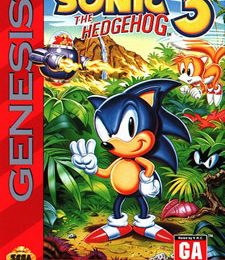
Sonic the Hedgehog 3

Sonic the Hedgehog 3 is a 1994 platform game developed and published by Sega. It is part of the Sonic the Hedgehog series and follows Sonic the Hedgehog 2 (1992). After Doctor Robotnik‘s spaceship, the Death Egg, crash-lands on a mysterious floating island, Sonic and Tails attempt to retrieve the Chaos Emeralds to stop it from relaunching. Sonic 3 introduces Knuckles the Echidna, the island guardian, who lays traps for Sonic and Tails. Gameplay is similar to previous entries, with players traversing side-scrolling levels at high speeds while collecting rings and defeating enemies.

Development began in January 1993, shortly after the release of Sonic 2. It was initially developed as an isometric game similar to Sonic 3D Blast (1996), but became a conventional 2D platformer due to time constraints. Sonic 3‘s production took place simultaneously with Sonic & Knuckles; they were developed as a single game until time constraints and cartridge costs forced the developers to split it. The Sonic 3 cartridge can be attached to an adapter on the Sonic & Knuckles cartridge, creating a combined game, Sonic 3 & Knuckles. Pop musician Michael Jackson reportedly composed portions of the soundtrack, but left the project and went uncredited.

Sonic 3 was released for the Sega Genesis in North America and Europe in February 1994, and in Japan the following May. As with its predecessors, it was a critical and commercial success, with critics seeing it as an improvement over previous installments. It sold over one million copies in the United States, making it one of the bestselling Genesis games. Alongside Sonic & Knuckles, a Windows port was released through the Sonic & Knuckles Collection (1997). The game has also been rereleased via emulation and compilations for various platforms, including Sonic Mega Collection (2002) and Sonic’s Ultimate Genesis Collection (2009).
Tagged : / / /

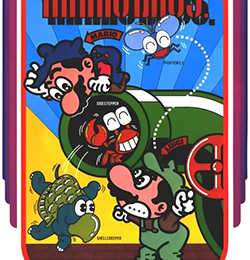
Mario Bros.

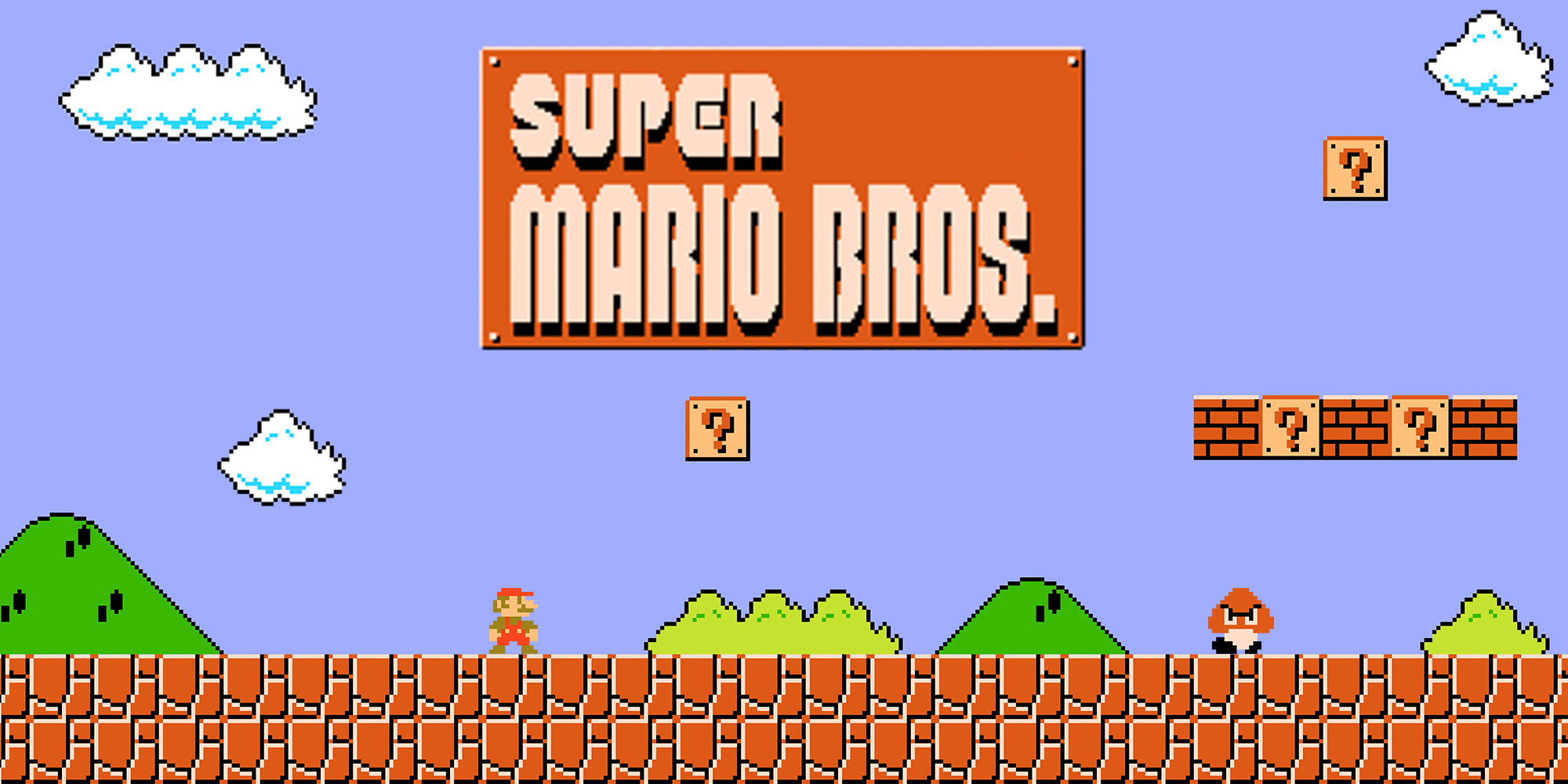
Mario Bros. is a platform game published and developed for arcades by Nintendo in 1983. It was created by Shigeru Miyamoto. Italian-American plumber Mario and his brother Luigi exterminate creatures emerging from the sewers by flipping them on their backs and kicking them away. The original versions of Mario Bros.—the arcade version and the Family Computer/Nintendo Entertainment System (FC/NES) version—were received positively by critics.

Mario Bros. has been included as a mini-game in all of the Super Mario Advance series and numerous other games. Mario Bros. has been re-released for the Wii‘s, Nintendo 3DS‘s, and Wii U‘s Virtual Console services in Japan, North America, Europe, and Australia. It has also been re-released through Nintendo Switch Online.

Tagged :

Bubble Bobble 2


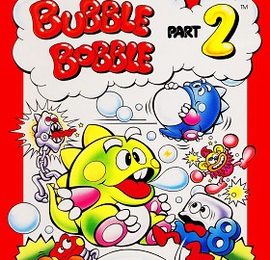
Bubble Bobble Part 2, known in Japan as Bubble Bobble 2 (バブルボブル2) is a game in the Bubble Bobble series. While it was never released in the arcade, two versions of the game were developed independently from each other (for the NES and Game Boy formats), with each game receiving a different storyline as a result. The Game Boy version is known in Japan as Bubble Bobble Junior (バブルボブルジュニア).

Tagged :

Ghosts’n Goblins

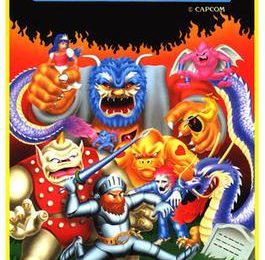
Ghosts ‘n Goblins (Japanese魔界村HepburnMakaimura, lit. Demon World Village) is a side-scrolling platform game developed by Capcom and released in arcades in 1985. It has since been ported to numerous home platforms. It is the first game in the Ghosts ‘n Goblins franchise. It was directed by Tokuro Fujiwara.

Ghosts ‘n Goblins is a platform game where the player controls a knight, named Sir Arthur, who must defeat zombies, ogres, demons, cyclopes, dragons and other monsters in order to rescue Princess Prin-Prin, who has been kidnapped by Astaroth, king of Demon World. Along the way, the player can pick up new weapons, bonuses and extra suits of armor that can help in this task.

The player can only be hit twice before losing a life. Losing a life will result in having to restart the level, or starting at the halfway point if the player has managed to get that far. Furthermore, each life can only last a certain length of time. After defeating the final boss, the player must then replay the entire game on a higher difficulty level to reach the genuine final battle.


Tagged : / /

Captain Commando

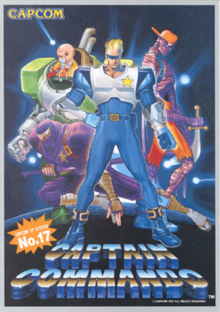
Captain Commando (Japanese: キャプテンコマンドー, Hepburn: Kyaputen Komandō) is a 1991 futuristic side-scrolling beat ’em up video game originally developed and published by Capcom as a coin-operated arcade video game, and later ported to several other platforms. It was the seventeenth title produced for the company’s CP System hardware. The game stars the titular superhero who was originally conceived as a fictional spokesman used by Capcom USA in the company’s console games during the late 1980s.[citation needed] On September 13, 2018, Capcom announced Capcom Beat ‘Em Up Bundle with Captain Commando being one of seven titles and released digitally for PlayStation 4, Nintendo Switch, Xbox One and Microsoft Windows on September 18, 2018.

Tagged : / / / / /

Bubble Bobble

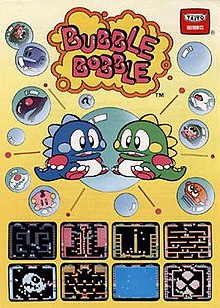
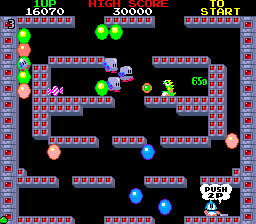
Bubble Bobble is a platform game by Taito, first released in arcades in 1986 and later ported to home systems by Toei Company. The game, starring the twin Bubble Dragons Bub and Bob, tasks players with traveling through one hundred stages, blowing and bursting bubbles, jumping on and off blown bubbles to navigate level obstacles, dodging and eliminating enemies. The main goal of the game is to rescue Bub and Bob’s girlfriends from the Cave of Monsters.

The player can collect a variety of items including some that carry power-ups and significant bonuses. For example, the red shoe allows Bub and Bob to move faster, while wrapped candies cause Bub and Bob to blow bubbles faster, and blow bubbles at greater distances. Other items, such as umbrellas, allow skipping numerous levels, moving closer to the final level. The game has multiple endings, which depend on the player’s performance and discovery of secrets.

The creator of Bubble Bobble, the late Fukio Mitsuji (MTJ)

Tagged : /

Bubble Bobble Lost Cave

Bubble Bobble is a platform game by Taito, first released in arcades in 1986 and later ported to home systems by Toei Company. The game, starring the twin Bubble Dragons Bub and Bob, tasks players with traveling through one hundred stages, blowing and bursting bubbles, jumping on and off blown bubbles to navigate level obstacles, dodging and eliminating enemies. The main goal of the game is to rescue Bub and Bob’s girlfriends from the Cave of Monsters.

The player can collect a variety of items including some that carry power-ups and significant bonuses. For example, the red shoe allows Bub and Bob to move faster, while wrapped candies cause Bub and Bob to blow bubbles faster, and blow bubbles at greater distances. Other items, such as umbrellas, allow skipping numerous levels, moving closer to the final level. The game has multiple endings, which depend on the player’s performance and discovery of secrets.

The creator of Bubble Bobble, the late Fukio Mitsuji (MTJ)

Tagged :