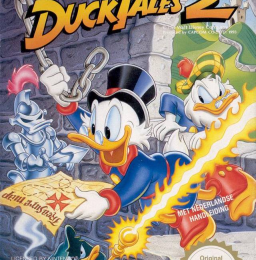
DuckTales 2 is a platform video game developed by Make Software and published by Capcom. It is a sequel to the original DuckTales based on the Disney animated series of the same name. It was released on the Nintendo Entertainment System in early 1993. The title was ported to the Game Boy handheld system in Japan and North America at the end of the year.
Tag: Adventure
Duck Tales
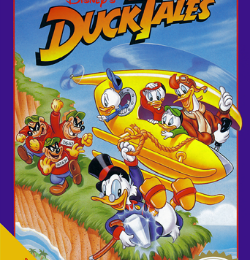
DuckTales is an action platformer video game developed and published by Capcom and based on the Disney animated TV series of the same name. It was first released in North America for the Nintendo Entertainment System in 1989 and was later ported to the Game Boy in 1990. The story involves Scrooge McDuck traveling around the globe collecting treasure and outwitting his rival Flintheart Glomgold to become the world’s richest duck.
Produced by key personnel from the Mega Man series, DuckTales would go on to sell over a million copies worldwide on each system, becoming Capcom’s best-selling title for both platforms. The game was praised for its tight control, unique and non-linear gameplay, and bright presentation, and is often regarded as one of the best titles for the NES, appearing on numerous “Best of” lists.
DuckTales was followed by a sequel, DuckTales 2, in 1993. A Remastered version of DuckTales developed by WayForward Technologies, featuring high-resolution graphics and performances by the surviving members of the show’s voice cast, was released in 2013 for PC, Xbox 360, PlayStation 3, and Wii U. The original 8-bit version of the game was also included in The Disney Afternoon Collection compilation for PC, PlayStation 4, and Xbox One.
Prince of Persia

Prince of Persia is a fantasy cinematic platformer designed and implemented by Jordan Mechner for the Apple II and published by Broderbund in 1989. Taking place in ancient Persia, players control an unnamed protagonist who must venture through a series of dungeons to defeat the Grand Vizier Jaffar and save an imprisoned princess.
Much like Karateka, Mechner’s first game, Prince of Persia used rotoscoping for its fluid and realistic animation. For this process, Mechner used as reference for the characters’ movements videos of his brother doing acrobatic stunts in white clothes and swashbuckler films such as The Adventures of Robin Hood.
The game was critically acclaimed, but not an immediate commercial success as it was released at the tail end of the Apple II’s relevance. It sold many copies as it was ported to a wide range of platforms. It is believed to have been the first cinematic platformer and inspired many games in this subgenre, such as Another World. Its success led to the release of two sequels, Prince of Persia 2: The Shadow and the Flame and Prince of Persia 3D, and two reboots of the series, first in 2003 with Prince of Persia: The Sands of Time, which led to three sequels of its own, and then again in 2008 with the identically-titled Prince of Persia.
Contra
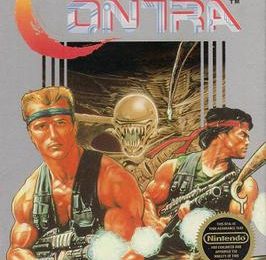
Contra is a run and gun video game developed and published by Konami, originally released as a coin-operated arcade game on February 20, 1987. A home version was released for the Nintendo Entertainment System in 1988, along with ports for various computer formats, including the MSX2. The home versions were localized in the PAL region as Gryzor on the various computer formats and as Probotector on the NES, released later. Several Contra sequels were produced following the original game.
Super Mario World
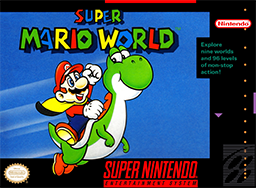
Super Mario World is a 1990 platform game developed and published by Nintendo for the Super Nintendo Entertainment System (SNES). The story follows Mario‘s quest to save Princess Toadstool and Dinosaur Land from the series antagonist Bowser and his minions, the Koopalings. The gameplay is similar to that of earlier Super Mario games: Players control Mario or his brother Luigi through a series of levels in which the goal is to reach the flagpole at the end. Super Mario World introduced Yoshi, a dinosaur who can eat enemies and gain abilities by eating the shells of Koopa Troopas.
Nintendo Entertainment Analysis & Development developed the game, led by director Takashi Tezuka and producer and series creator Shigeru Miyamoto. It is the first Mario game for the SNES and was designed to make the most of the console’s technical features. The development team had more freedom compared to the series installments for the Nintendo Entertainment System (NES). Yoshi was conceptualised during the development of the NES games but was not used until Super Mario World due to hardware limitations.
Super Mario World is often considered one of the greatest video games of all time. It sold over 20 million copies worldwide, making it the best-selling SNES game. It also led to an animated television series of the same name and a prequel, Yoshi’s Island, released in August and October 1995. It has been re-released on multiple occasions: It was part of the 1994 compilation Super Mario All-Stars + Super Mario World for the SNES and was re-released for the Game Boy Advance as Super Mario World: Super Mario Advance 2 in 2001, on the Virtual Console for the Wii, Wii U, and New Nintendo 3DS consoles, and as part of the Super NES Classic Edition. It was also released on the Nintendo Switch through Nintendo Switch Online using the Super Nintendo Entertainment System app. It is also a course style in Super Mario Maker, and Super Mario Maker 2.
Super Mario Bros. 3
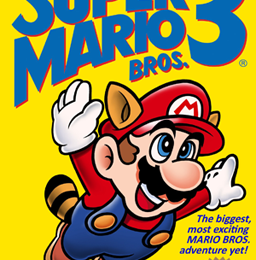
Super Mario Bros. 3 is a platform game developed and published by Nintendo for the Nintendo Entertainment System (NES). It was released in Japan on October 23, 1988, in North America on February 12, 1990, and Europe on August 29, 1991. It was developed by Nintendo Entertainment Analysis and Development, led by Shigeru Miyamoto and Takashi Tezuka.
Rayman
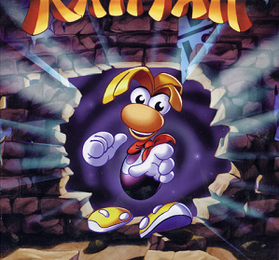
Rayman is a side-scrolling platform video game developed and published by Ubi Soft. As the first installment in the Rayman series, the game follows the adventures of Rayman, a hero who must save his colourful world from the evil Mr. Dark. Originally designed for the Atari Jaguar in 1995, a PlayStation version was developed and released in time for the North American launch of the console on 9 September 1995; and further ports were created for Sega Saturn in 1995 and MS-DOS computers in 1996. The game has appeared in various other formats, including versions for the Game Boy Advance, PlayStation Network, DSiWare, and iOS and Android devices.
The mobile versions of Rayman were removed from digital stores in July 2018. On October 29, 2018, Sony revealed that the game would be one of 20 games pre-loaded on the PlayStation Classic, which was released on December 3, 2018.
Sonic the Hedgehog 3
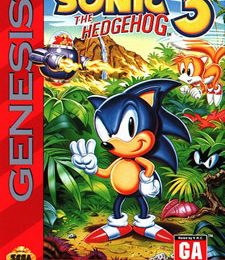
Sonic the Hedgehog 3 is a 1994 platform game developed and published by Sega. It is part of the Sonic the Hedgehog series and follows Sonic the Hedgehog 2 (1992). After Doctor Robotnik‘s spaceship, the Death Egg, crash-lands on a mysterious floating island, Sonic and Tails attempt to retrieve the Chaos Emeralds to stop it from relaunching. Sonic 3 introduces Knuckles the Echidna, the island guardian, who lays traps for Sonic and Tails. Gameplay is similar to previous entries, with players traversing side-scrolling levels at high speeds while collecting rings and defeating enemies.
Development began in January 1993, shortly after the release of Sonic 2. It was initially developed as an isometric game similar to Sonic 3D Blast (1996), but became a conventional 2D platformer due to time constraints. Sonic 3‘s production took place simultaneously with Sonic & Knuckles; they were developed as a single game until time constraints and cartridge costs forced the developers to split it. The Sonic 3 cartridge can be attached to an adapter on the Sonic & Knuckles cartridge, creating a combined game, Sonic 3 & Knuckles. Pop musician Michael Jackson reportedly composed portions of the soundtrack, but left the project and went uncredited.
Sonic 3 was released for the Sega Genesis in North America and Europe in February 1994, and in Japan the following May. As with its predecessors, it was a critical and commercial success, with critics seeing it as an improvement over previous installments. It sold over one million copies in the United States, making it one of the bestselling Genesis games. Alongside Sonic & Knuckles, a Windows port was released through the Sonic & Knuckles Collection (1997). The game has also been rereleased via emulation and compilations for various platforms, including Sonic Mega Collection (2002) and Sonic’s Ultimate Genesis Collection (2009).
Fighting Force
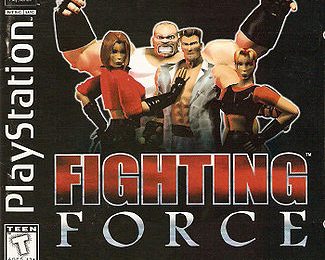
Fighting Force is a 1997 3D beat ’em up developed by Core Design and published by Eidos. It was released for PlayStation, Microsoft Windows, and Nintendo 64. Announced shortly after Core became a star developer through the critical and commercial success of Tomb Raider, Fighting Force was highly anticipated but met with mixed reviews.
The four characters have various reasons for taking on Dr. Dex Zeng, a criminal mastermind with an army at his command who predicted that the world would end in the year 2000. After New Year’s Eve 1999, Dr. Zeng believed that there was an error preventing the apocalypse, so decides to correct it by destroying the world himself. The action starts with a police cordon around Zeng’s office skyscraper, moving to such locales as a shopping mall, subway and Coast Guard base before finally ending at the top of Zeng’s island headquarters.
Caveman Ninja
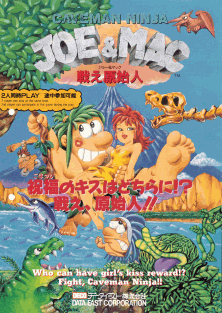
Joe & Mac, also known as Caveman Ninja and Caveman Ninja: Joe & Mac, is a 1991 platform game released for arcades by Data East. It was later adapted for the Super NES, Mega Drive/Genesis, Nintendo Entertainment System, Game Boy, Amiga, Zeebo, Nintendo Switch, and PC.
Captain Commando
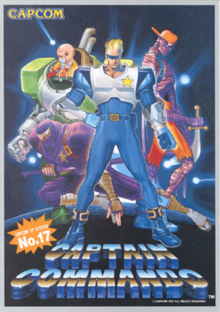
Captain Commando (Japanese: キャプテンコマンドー, Hepburn: Kyaputen Komandō) is a 1991 futuristic side-scrolling beat ’em up video game originally developed and published by Capcom as a coin-operated arcade video game, and later ported to several other platforms. It was the seventeenth title produced for the company’s CP System hardware. The game stars the titular superhero who was originally conceived as a fictional spokesman used by Capcom USA in the company’s console games during the late 1980s.[citation needed] On September 13, 2018, Capcom announced Capcom Beat ‘Em Up Bundle with Captain Commando being one of seven titles and released digitally for PlayStation 4, Nintendo Switch, Xbox One and Microsoft Windows on September 18, 2018.
Cadillacs & Dinosaurs
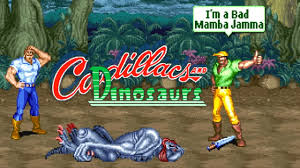
Cadillacs and Dinosaurs, released in Japan as Cadillacs Kyouryuu Shinseiki (キャディラックス 恐竜新世紀, Kyadirakkusu Kyōryū Shinseki), is a 1992 arcade game by Capcom. It is a side-scrolling beat ’em up based on the comic book series Xenozoic Tales. The game was produced as a tie-in to the short-lived Cadillacs and Dinosaurs animated series which was aired during the same year the game was released.