Casper

Casper is a series of action-adventure games based on the 1995 film of the same name. Two different games were released in 1996 and 1997 for the Super Nintendo Entertainment System, by different publishers, in different regions. A third game was released for the 3DO (the final release for that system), Sega Saturn, PlayStation, and Game Boy Color, published by Interplay Productions. There was also a Game Boy game developed by Bonsai. A PC game, Casper: The Interactive Adventure, and a Game Boy Advance game, simply titled Casper, were released in 1997 and 2002 respectively serving as sequels.

Mini-games
Fatso’s Creature Feature is a simple puzzle game with players completing puzzles that result in brief animations once finished. “Easy” has the player assembling Casper and his uncles, while “medium” has the player assembling puzzles featuring the Ghostly Trio in different shapes, colors and patterns. As explained upwards, the hard difficulty puzzles consist of stills from the film which when completed, play a scene relating to that image.
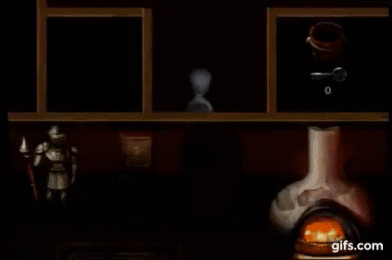
Stretch’s Shake Rattle and Roll is a spelling game in which players have to free Casper from the kitchen stove chimney (Stretch had trapped him down it) by spelling words in a Tetris-like fashion. Players have to use the arrow keys to put each letter into the correct boxes and each time a word is completed, Stretch moves Casper up a level until he reaches the top. On higher difficulties, the letters will fall faster and even appear in different orientations, so players must also use the up and down arrows to turn the letters. If no letters match any in the current word, they can be given to Fatso, though he will also eat any letters that are incorrectly matched or are in the wrong orientation even if they are matched.
Stinky’s Peek-A-Boo has the player help the ghost version of Dr. Harvey (who is trapped in the Lazarus) catch Stinky, who has stolen the Cellular Integrator for the Lazarus in an attempt to keep Harvey as a ghost. Stinky will turn himself into random shapes and players have to click on different tiles on a board to find words or objects (based on the current difficulty) that match the current shape he has become or something within the shape itself (i.e. a day of the week). The higher the difficulty, the more words/objects the player has to match to catch Stinky.

Sega Saturn, 3DO, PlayStation, and Game Boy Color game
The version published by Interplay and developed by Funcom plays as a top-view action-adventure game with pre-rendered graphics. The game features an alternate rendition of the film’s plot (with some of its dark elements retained) spread across three acts, consisting of Casper finding tokens of friendship for Kat and Dr. Harvey, then finding the pieces for the Lazarus machine (which the Ghostly Trio had disassembled to prevent Casper from using it) and assembling it, and finally finding the Cellular Integrator with which to restore Harvey (which is stolen by Carrigan, leading to the final challenge), while exploring the mansion, collecting jigsaw pieces to solve puzzles for morph icons, eating food for morph points and dealing with the Ghostly Trio. Unlike other versions, other than the Ghostly Trio and Carrigan, there are no enemies. The game instead focuses mainly on solving puzzles. Like in the Brainy Book, Casper and his uncles were reprised by their respective voice actors, whilst Kat and Dr. Harvey were voiced by Tanya Krievins and Blair Bess (again replacing Ricci and Pullman), with Bess providing narration for each act’s introduction as well as reading out several hint parchments found throughout the game. Carrigan’s voice actor remains uncredited (due to her appearing at the end and her only line being “I’ll take that!”).

In an odd seeming oversight, in the game, no matter what one does, the player seems to wind up with an extra red key.[2][3] Players have scoured the manor with no luck finding an extra red door. After combing through the games information, it seems there truly is no extra red door or room in which to use it. It is possible and likely that the extra red key was an oversight in the fact that it may have supposed to have been a gold key. If the player uses one of the gold key’s in the wrong intended order, it softlocks the player out of the latter half of the game’s secrets. It is also possible, but less likely, that it is merely a red herring.

The Game Boy Color game is a scaled-down version of the Saturn/3DO/PS game with the only puzzles and morph icons being the ones required to reach the ending and the sound and graphics are rendered for handheld.
Tagged : / /

Ghosts ‘n Goblins

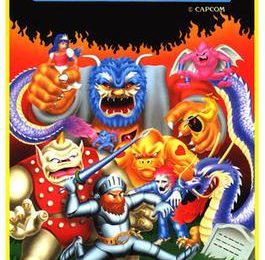
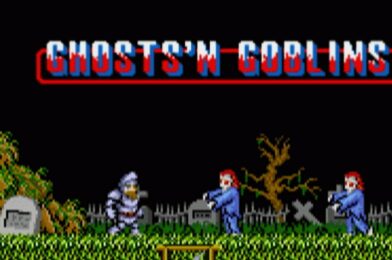
Ghosts ‘n Goblins (Japanese: 魔界村, Hepburn: Makaimura, lit. Demon World Village) is a run and gun platform game created by Tokuro Fujiwara and developed by Capcom. The first entry in the series was Ghosts ‘n Goblins, released in arcades on September 19, 1985. The series has subsequently been ported to and released on a variety of game consoles and mobile platforms and spawned several sequels and spin-offs.

The main series focuses on the knight Arthur‘s quest to save princess Prin-Prin from the demon king Astaroth. The primary spin-offs include the Gargoyle’s Quest and Maximo game series.

The series as a whole has sold over 4.2 million units and stands as the 13th best-selling Capcom game franchise. It has gained a reputation among players for its high level of difficulty

The most recent game in the series, Ghosts ‘n Goblins Resurrection, was released on February 25, 2021.

Tagged : / / /

Asterix

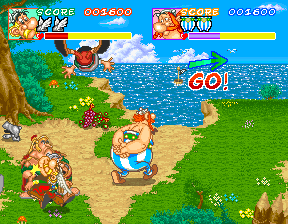
Asterix is a horizontal-scrolling beat’em up arcade game released in 1992 by Konami. It is based on the French comic series Asterix and Obelix. The player fights as either Asterix the Gaul or his best friend, Obelix, as they take on the ‘might’ of the oppressive Roman Empire. Asterix includes a variety of humorous fighting moves, which are demonstrated in the game’s attract mode. The artwork and feel of Asterix remains true to its French source material, and the game’s many humorous touches (such as the way defeated Legionnaires crawl away) will be instantly familiar to fans of the comic-book and cartoon series. Bonus levels – such as the chariot race that awaits at the end of the first level – introduce different gameplay elements to provide a break from the fighting. Despite this game being developed by a Japanese company, all text in the game is either in English or French.

Tagged : / /

Tom & Jerry (and Tuffy)

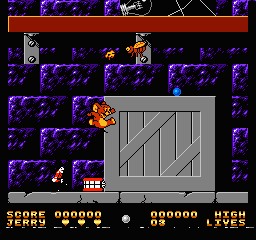
A Tom and Jerry video game (also known as Tom and Jerry: The Ultimate Game of Cat and Mouse! or Tom and Jerry (and Tuffy)) was released by Hi Tech Expressions for the Nintendo Entertainment System in 1991 and for MS-DOS in 1993. Tom has mouse-napped Jerry’s nephew Tuffy and locked him in a trunk in the attic. Usable weapons include bubble gum, meat cleaver, cups of water, moth balls, hammer, invisible ink and drill.

Tagged : / /

Prince of Persia

Prince of Persia is a fantasy cinematic platformer designed and implemented by Jordan Mechner for the Apple II and published by Broderbund in 1989. Taking place in ancient Persia, players control an unnamed protagonist who must venture through a series of dungeons to defeat the Grand Vizier Jaffar and save an imprisoned princess.

Much like Karateka, Mechner’s first game, Prince of Persia used rotoscoping for its fluid and realistic animation. For this process, Mechner used as reference for the characters’ movements videos of his brother doing acrobatic stunts in white clothes and swashbuckler films such as The Adventures of Robin Hood.

The game was critically acclaimed, but not an immediate commercial success as it was released at the tail end of the Apple II’s relevance. It sold many copies as it was ported to a wide range of platforms. It is believed to have been the first cinematic platformer and inspired many games in this subgenre, such as Another World. Its success led to the release of two sequels, Prince of Persia 2: The Shadow and the Flame and Prince of Persia 3D, and two reboots of the series, first in 2003 with Prince of Persia: The Sands of Time, which led to three sequels of its own, and then again in 2008 with the identically-titled Prince of Persia.

Tagged : / /

Fighting Force

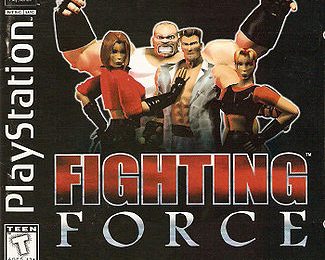
Fighting Force is a 1997 3D beat ’em up developed by Core Design and published by Eidos. It was released for PlayStationMicrosoft Windows, and Nintendo 64. Announced shortly after Core became a star developer through the critical and commercial success of Tomb RaiderFighting Force was highly anticipated but met with mixed reviews.

The four characters have various reasons for taking on Dr. Dex Zeng, a criminal mastermind with an army at his command who predicted that the world would end in the year 2000. After New Year’s Eve 1999, Dr. Zeng believed that there was an error preventing the apocalypse, so decides to correct it by destroying the world himself. The action starts with a police cordon around Zeng’s office skyscraper, moving to such locales as a shopping mall, subway and Coast Guard base before finally ending at the top of Zeng’s island headquarters.

Tagged : / / /

Resident Evil 3: Nemesis

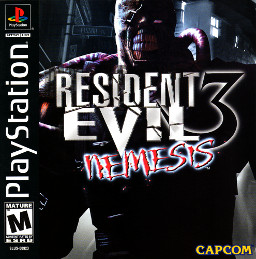
Resident Evil 3: Nemesis is a survival horror video game developed by Capcom and released for the PlayStation in 1999. It is the third installment in the Resident Evil series and takes place in two parts, before and after the events of Resident Evil 2. The story follows Jill Valentine and her efforts to escape from a city infected with a biological weapon. Choices through the game affect the story and ending. The game uses the same engine as its predecessors and features 3D models over pre-rendered backgrounds with fixed camera angles.

Originally planned as a spin-off featuring a different protagonist, Resident Evil 3 was designed to have more action-oriented gameplay than previous Resident Evil games. It features a larger number of enemies and introduces the Nemesis creature, which periodically pursues the player. Accompanied by a major marketing campaign, Resident Evil 3 received positive reviews and sold more than three million copies worldwide. Critics praised the game’s detailed graphics and the Nemesis as an intimidating villain, but some criticized its short length and story. Resident Evil 3 was ported to DreamcastWindows and GameCube to varying success. A remake of the game was released for PlayStation 4Xbox One, and Windows in 2020.

Tagged : / / /

Tekken 3

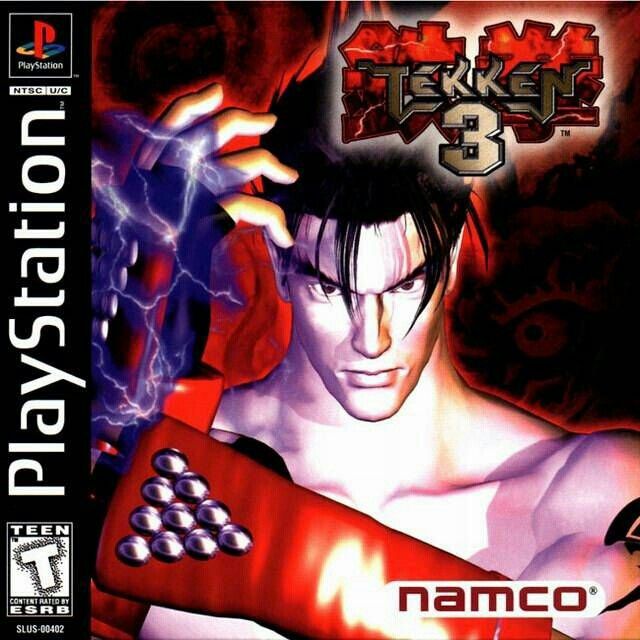
Tekken 3 is the third installment of Namco’s premier 3D fighting game franchise. Converted from the arcade to the PlayStation, Tekken 3 ran on the technology called the System 12 board. It is a step better than Namco’s System 11 board, which is nearly identical to the PlayStation. The trick was to pull off a conversion to fit with the console’s architecture and technology, and they did just that.

Continue reading “Tekken 3”

Tagged : / /

Final Fight

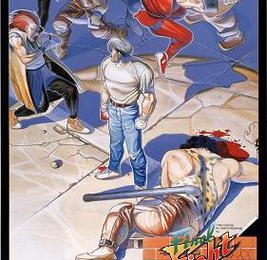
Final Fight (JapaneseファイナルファイトHepburnFainaru Faito) is a side-scrolling beat-’em-up video game produced by Capcom. Originally released as an arcade game in 1989, it was the seventh title released for the CP System hardware. Set in the non-fictional United States of the fictional Metro City, the player controls one of three street fighters: former pro wrestler and city mayor Mike Haggar, his daughter’s boyfriend Cody, as well as his daughter’s best friend and Cody’s worthy rival Guy, as they set out to clash with the Mad Gear Gang and rescue Haggar’s young daughter Jessica from their ransom.

The game began development as a sequel to the original Street Fighter released in 1987, but the genre was switched from a fighting game to a beat ’em up and the title was changed following the success of Double DragonFinal Fight was ported to various home consoles such as the Super NES and was followed by a few sequels. Its development team later worked on the original Street Fighter II and some of the characters from Final Fight later appeared as playable fighters in other entries of the franchise such as the Street Fighter Alpha sub-series. On September 13, 2018, Capcom announced Capcom Beat ‘Em Up Bundle with Final Fight being one of seven titles and released digitally for PlayStation 4Nintendo SwitchXbox One, and Microsoft Windows on September 18, 2018.

Tagged : / /

Ghosts’n Goblins

Ghosts ‘n Goblins (Japanese魔界村HepburnMakaimura, lit. Demon World Village) is a side-scrolling platform game developed by Capcom and released in arcades in 1985. It has since been ported to numerous home platforms. It is the first game in the Ghosts ‘n Goblins franchise. It was directed by Tokuro Fujiwara.

Ghosts ‘n Goblins is a platform game where the player controls a knight, named Sir Arthur, who must defeat zombies, ogres, demons, cyclopes, dragons and other monsters in order to rescue Princess Prin-Prin, who has been kidnapped by Astaroth, king of Demon World. Along the way, the player can pick up new weapons, bonuses and extra suits of armor that can help in this task.

The player can only be hit twice before losing a life. Losing a life will result in having to restart the level, or starting at the halfway point if the player has managed to get that far. Furthermore, each life can only last a certain length of time. After defeating the final boss, the player must then replay the entire game on a higher difficulty level to reach the genuine final battle.


Tagged : / /

Captain Commando

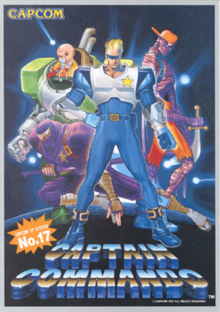
Captain Commando (Japanese: キャプテンコマンドー, Hepburn: Kyaputen Komandō) is a 1991 futuristic side-scrolling beat ’em up video game originally developed and published by Capcom as a coin-operated arcade video game, and later ported to several other platforms. It was the seventeenth title produced for the company’s CP System hardware. The game stars the titular superhero who was originally conceived as a fictional spokesman used by Capcom USA in the company’s console games during the late 1980s.[citation needed] On September 13, 2018, Capcom announced Capcom Beat ‘Em Up Bundle with Captain Commando being one of seven titles and released digitally for PlayStation 4, Nintendo Switch, Xbox One and Microsoft Windows on September 18, 2018.

Tagged : / / / / /