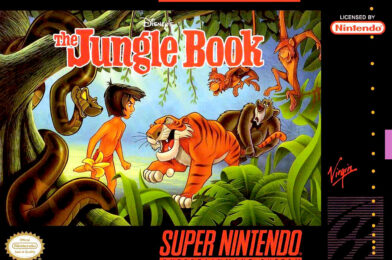
Disney’s The Jungle Book is a series of platform video games based on the 1967 Disney animated film of the same name. The game was released by Virgin Interactive Entertainment in 1994 for the Game Boy, Nintendo Entertainment System, Master System, Genesis/Mega Drive, Game Gear, Super Nintendo Entertainment System, and MS-DOS. While gameplay is the same on all versions, technological differences between the systems forced changes – in some case drastic – in level design, resulting in six fairly different versions of the ‘same’ game. This article is largely based upon the Genesis version.
Day: April 28, 2024
Crash Team Racing
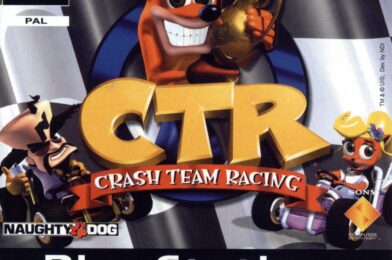
Crash Team Racing (stylized as CTR: Crash Team Racing) is a 1999 kart racing video game developed by Naughty Dog and published by Sony Computer Entertainment for the PlayStation. It is the fourth installment in the Crash Bandicoot series. The game’s story focuses on the efforts of Crash Bandicoot, Doctor Neo Cortex, and other ragtag team of characters in the Crash Bandicoot series, who must race against the egomaniacal Nitros Oxide to save the Earth from destruction. In the game, players can take control of one of fifteen Crash Bandicoot series characters, though only eight are available at first. During the races, offensive and speed boosting power-ups can be used to gain an advantage.
Crash Team Racing was released on October 19, 1999, in North America, and on October 20, 1999 in Europe. It was praised by critics for its gameplay and graphics, though the audio was met with mixed opinions. A successor, Crash Nitro Kart, was released in 2003 for the Game Boy Advance, GameCube, PlayStation 2, Xbox and N-Gage. A remaster of the game, titled Crash Team Racing Nitro-Fueled, was announced at The Game Awards 2018 and was released on PlayStation 4, Xbox One and Nintendo Switch on June 21, 2019.
Twisted Metal 4
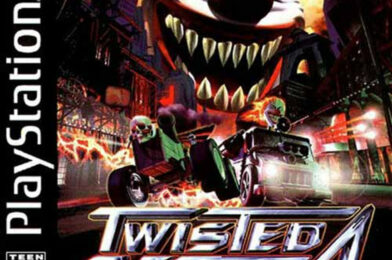
Twisted Metal 4 is a vehicular combat video game developed by 989 Studios and published by Sony Computer Entertainment for the PlayStation. The game was released in North America on November 16, 1999 and was re-released for the Sony Greatest Hits line-up in 2000. Like the previous installment, it wasn’t released in the PAL regions.
Twisted Metal 4 is the fourth installment in the Twisted Metal series and the second and last installment to be developed by 989 Studios. The game’s plot centers on Sweet Tooth, the long-time mascot of the titular Twisted Metal competition, overthrowing Calypso, the mysterious organizer of the competition, in a coup d’état. He then takes over the mantle of granting the winner of the competition a single wish, regardless of price, size or even reality.
Twisted Metal 4 received mixed to positive reviews from critics, who considered it to be an improvement over the previous Twisted Metal III, particularly in terms of level design.
Silent Hill
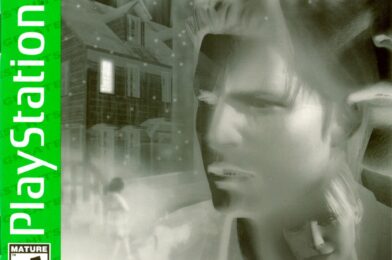
Silent Hill is a 1999 survival horror game developed by Team Silent, a group in Konami Computer Entertainment Tokyo and published by Konami. The first installment in the video game series Silent Hill, the game was released exclusively for the PlayStation. Silent Hill uses a third-person view, with real-time rendering of 3D environments. To mitigate limitations of the console hardware, developers used fog and darkness to muddle the graphics and the pop-ins, which in return helped set up the atmosphere and mystery of the game. Unlike earlier survival horror games that focused on protagonists with combat training, the player character of Silent Hill is an “everyman”.[3]
The game follows Harry Mason as he searches for his missing adopted daughter in the eponymous fictional American town of Silent Hill; stumbling upon a cult conducting a ritual to revive a deity it worships, he discovers her true origin. Five game endings are possible, depending on actions taken by the player, including one joke ending.
Silent Hill received positive reviews from critics on its release and was commercially successful. It is considered by many to be one of the greatest video games ever made, as well as a defining title in the survival horror genre, as it moved away from B movie horror elements toward a more psychological horror style, emphasizing atmosphere.[3] Various adaptations of Silent Hill have been released, including a 2001 visual novel, the 2006 feature film Silent Hill, and a 2009 reimagining of the game, titled Silent Hill: Shattered Memories. The game was followed by Silent Hill 2 in 2001, and a direct sequel, Silent Hill 3, in 2003.
Resident Evil 2
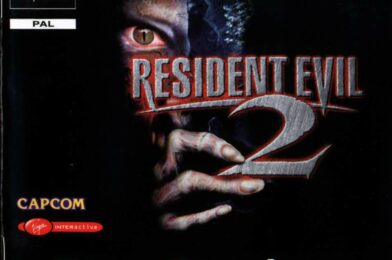
(Disc 1) (Leon)
(Disc 2) (Claire)
Resident Evil 2 is a 1998 survival horror video game developed and published by Capcom for the PlayStation. The player controls rookie cop Leon S. Kennedy and college student Claire Redfield, who must escape Raccoon City after its citizens are transformed into zombies by a biological weapon two months after the events of the original Resident Evil. The gameplay focuses on exploration, puzzles, and combat; the main difference from its predecessor are the branching paths, with each player character having unique storylines, partners and obstacles.
Resident Evil 2 was produced by Resident Evil director Shinji Mikami, directed by Hideki Kamiya, and developed by a team of approximately 50 across 21 months. The initial version, commonly referred to as Resident Evil 1.5, differs drastically; it was canceled at approximately two thirds completion because Mikami decided it was inadequate. The final design introduced a more cinematic presentation.
Resident Evil 2 received acclaim for its atmosphere, setting, graphics, audio, scenarios, overall gameplay, and its improvements over the original game, but with some criticism towards its controls, voice acting, and certain gameplay elements. It is widely listed among the best video games ever made. It is the best-selling Resident Evil game for a single platform at more than 6 million copies sold across all platforms. It was ported to Windows, Nintendo 64, Dreamcast, and GameCube, and a modified 2.5D version was released for the Game.com handheld. The story of Resident Evil 2 was retold and built upon in several later games, and has been adapted into a variety of licensed works. It was followed by Resident Evil 3: Nemesis in 1999. A remake was released for PlayStation 4, Windows, and Xbox One in 2019.
Resident Evil
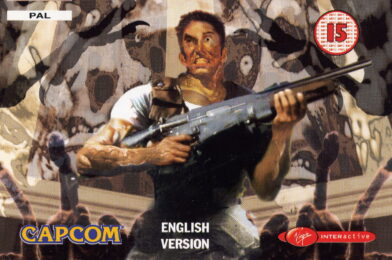
Resident Evil[c] is a 1996 survival horror game developed and published by Capcom for the PlayStation. It is the first game in Capcom’s Resident Evil franchise. Players control Chris Redfield and Jill Valentine, members of the elite task force S.T.A.R.S., who must escape a mansion infested with zombies and other monsters.
Resident Evil was conceived by the producer Tokuro Fujiwara as a remake of his 1989 horror game Sweet Home (1989). It was directed by Shinji Mikami. It went through several redesigns, first as Super NES game in 1993, then a fully 3D first-person PlayStation game in 1994 and finally a third-person game. Gameplay consists of action, exploration, puzzle solving and inventory management. Resident Evil established many conventions seen later in the series, and in other survival horror games, including the inventory system, save system, and use of a vitals-monitoring system instead of a health counter.
Resident Evil was praised for its graphics, gameplay, sound, and atmosphere, although it received some criticism for its dialogue and voice acting. It was an international best-seller, and became the highest-selling PlayStation game at the time. By December 1997, it had sold about 4 million copies worldwide and had grossed more than $200,000,000 (equivalent to $389,000,000 in 2023).
Resident Evil is often cited as one of the best video games of all time. It is credited with defining the survival horror genre and with returning zombies to popular culture, leading to a renewed interest in zombie films by the 2000s. It created a franchise including video games, films, comics, novels, and other merchandise. It has been ported to Sega Saturn, Windows and Nintendo DS. A sequel, Resident Evil 2, was released in 1998. In 2002, the game’s remake, alongside its prequel, Resident Evil Zero, were both released for GameCube (and subsequently on other platforms) in March and November 2002, respectively.
Crash Bandicoot – Warped
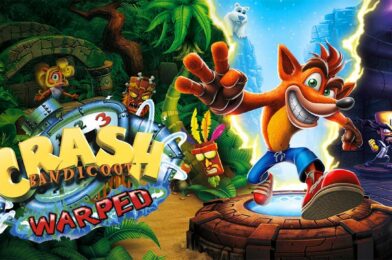
Crash Bandicoot: Warped, known in Europe as Crash Bandicoot 3: Warped, is a 1998 platform game developed by Naughty Dog and published by Sony Computer Entertainment for the PlayStation. It is the third game in the Crash Bandicoot video game series following Crash Bandicoot 2: Cortex Strikes Back.
The game’s story takes place immediately after the events of the second game. When the ruins of Doctor Neo Cortex’s space station crash-land on Earth, they unleash an evil entity known as Uka Uka, Aku Aku’s evil twin brother, who joins with Cortex and the time-obsessed Doctor Nefarious Tropy as they plan to gather powerful crystals that lay scattered across time, and use their energy to enslave the Earth. The game follows the main characters Crash and Coco Bandicoot as they travel through time and prevent the villains from gathering the crystals by collecting them themselves.
Crash Bandicoot: Warped was lauded by critics, who noted a high quality in many areas, including gameplay, graphics and audio, and the game has been considered one of the best video games of all time. It went on to sell nearly 6 million units, making it one of the best-selling video games for the PlayStation. In Japan, the game surpassed the sales of its two predecessors and became the first non-Japanese PlayStation title to sell over 1 million copies in the country. A remastered version was included in the Crash Bandicoot N. Sane Trilogy collection for the PlayStation 4 in June 2017, and ported to other platforms in June 2018.
Crash Bandicoot 2 – Cortex Strikes Back
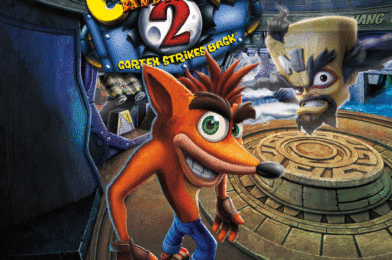
Crash Bandicoot 2: Cortex Strikes Back is a 1997 platform game developed by Naughty Dog and published by Sony Computer Entertainment for the PlayStation. It is a sequel to Crash Bandicoot (1996), and is part of the Crash Bandicoot series.
Taking place on a fictional group of islands near Australia, Crash Bandicoot 2 follows the adventures of the anthropomorphic bandicoot named Crash. Crash is abducted by series villain Doctor Neo Cortex, who tricks him into thinking he wants to save the world. Crash is thrust into several parts of N. Sanity Island in order to gather crystals that will allow Cortex to contain the power of an upcoming planetary alignment and keep the planet from being destroyed. Crash’s sister Coco and Cortex’s former assistant Doctor Nitrus Brio try to warn him about Cortex, with the latter urging Crash to gather gems instead of crystals.
Cortex Strikes Back received positive reviews from critics and is widely considered to be superior to its predecessor. Much of the praise went to the game’s graphics, controls and music, while criticisms focused on the trial-and-error gameplay, lack of level variety, easy boss levels and lack of innovation as a platform game. The game went on to become one of the best-selling PlayStation video games of all time and replaced its predecessor as the highest-selling Western title in Japan at the time, selling more than 800,000 copies in the country by April 1998. A remastered version was included in the Crash Bandicoot N. Sane Trilogy collection, released on the PlayStation 4 in June 2017, and ported to other platforms in June 2018.